
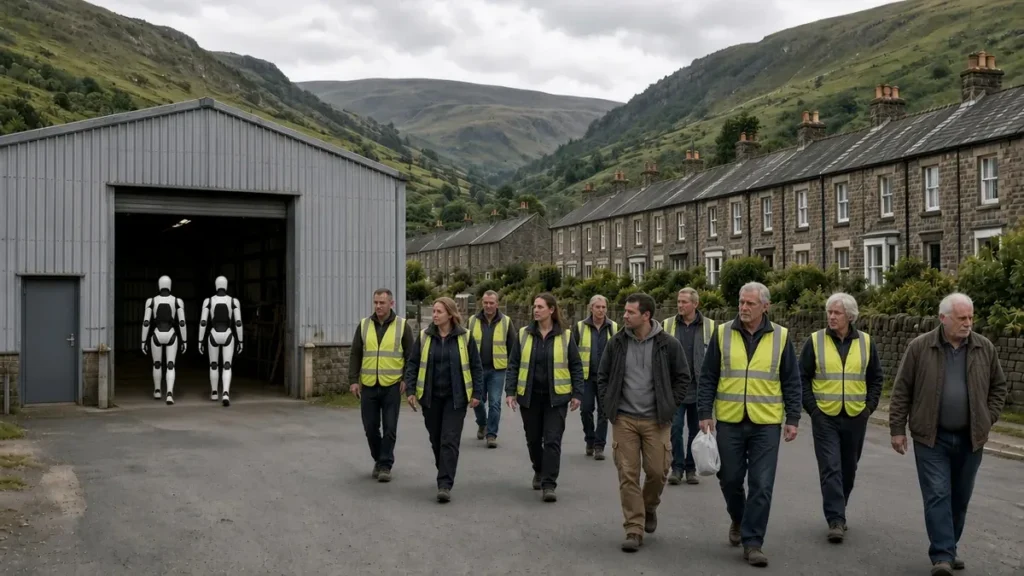
Five times, on whose numbers?

On 6 November, Elon Musk, Tesla’s chief executive, spoke by video link to the Baron Investment Conference in New York. He told the investors that “a minimum productivity expectation” for a humanoid robot “would be five times that of a human”. That is the source of our headline, and it is his claim, not a finding. His words are checked against Baron Capital’s broadcast of the talk on X, using a machine transcription of the audio, and against a published transcript.
On hours alone, 168 against 40 is 4.2 times.
His reasons came in the same answer. A robot “can work 24/7”, he said, for 168 hours a week, with no holidays or breaks, at “faster than human speed”. A person, he said, is “maybe working 40 hours a week”. He made a similar claim on Tesla’s earnings call in October 2025, saying Optimus “probably achieves five times the productivity of a person per year because it can operate twenty-four seven”.
The arithmetic is simple. On hours alone, 168 against 40 is 4.2 times. The rest of his estimate assumes robots will also work faster than people. We found no humanoid deployment that has published evidence of round-the-clock work or human speed. The best documented, the robot maker Figure’s work at BMW in South Carolina, ran a “10-hour shift Monday-Friday”.
The best case for the claim deserves a fair hearing. A robot that stays plugged in needs no breaks and no sleep. Tesla says its first customers want work “done basically 24/7”, according to its latest earnings call. Hardware costs are forecast to fall. Research from Bank of America, published in March 2026, puts the parts for a China-built humanoid at about $35,000 in 2025, falling below $17,000 by 2030. If robots reach human speed and run for most of the week, a multiple of four or five per robot is possible. It has not yet been shown.
A year away? What Tesla actually said

Tesla’s third-quarter update says “Optimus production began in Fremont on our high-volume lines”. It lists the California line as “Early Ramp”. It gives no unit count, price or customer.
So “a year away” fits one thing: Tesla’s own target for supplying other companies.
On the call on 21 October, Mr Musk said most of a line built for a million robots a year had “landed in Fremont”. Reaching that rate, about 20,000 a week, would take “at least a year, maybe a little longer”. On outside customers he said: “I do expect these issues to be solved around the end of next year. So that’s the time to expect when we’re delivering Optimus to companies outside of Tesla.”
The issues were the robot’s AI, design and durability. He said there was “still quite a lot of work to do” before it is useful for open-ended tasks, and that the hardest part is “mostly the hand”. So “a year away” fits one thing: Tesla’s own target for supplying other companies. That target is just over a year away, and Mr Musk tied it to those problems being solved.
Tesla’s earlier targets have slipped. In January 2025, Mr Musk said Tesla’s internal plan was for “roughly 10,000” Optimus robots that year, and that it would make “several thousand”. He said deliveries to other companies might start “in maybe the second half of next year”, meaning 2026, which he called “a very rough guess”. The research firm Omdia estimates that Tesla shipped about 150 humanoids in 2025.
In January 2026 he said Optimus was “not in usage in our factories in a material way”, and that Tesla would probably “unveil Optimus 3 in a few months”. Tesla had not unveiled it by its October call, where Mr Musk said a new Optimus video might come “in a month or so”. We found no unveiling up to 9 November. He told the Baron conference, according to the published transcript, that he aims for his predictions on timing to be at “the 50th percentile”, and said “that’s about how things have turned out”.
Pilots now, scale not yet proven
Humanoid robots are not a year away in every sense. Some are already at work, in small numbers. Omdia estimates that 13,318 were shipped worldwide in 2025, up from 2,300 in 2024. Chinese makers led: AgiBot shipped 5,168, Unitree 4,200 and UBTech 1,000. Figure, Agility and Tesla shipped about 150 each. These are estimates.
Pilots are real, but none has yet shown the speed or hours the five-times claim needs.
The pilots are real. Figure says its robots worked 11 months at BMW’s Spartanburg plant, loading more than 90,000 sheet-metal parts over more than 1,250 hours. It did not say how many robots took part, or whether they met their targets for speed and accuracy. Agility’s Digit robots work at nine customer sites and have logged more than 65,000 operating hours, according to its filing as reported by The Robot Report. The same filing shows revenue of $1.8 million in 2025 against an operating loss of $140 million. Its filing projects about 800 of its new Digit v5 robots deployed in 2027.
In Georgia, Boston Dynamics has Atlas robots “in training” on car parts at a Hyundai plant. It says Hyundai group plants plan to take 25,000 Atlas robots “over the next few years”.
Forecasts are far higher than today’s shipments. Bank of America expects 1.2 million humanoids to be shipped in 2030 and 10 million in 2035. Pilots are real, but none has yet shown the speed or hours the five-times claim needs.
Even Mr Musk is wary of demonstrations. He said on the October call that some humanoid demonstrations “look very impressive, but they’re not really using any kind of advanced AI”. A video is not proof of what a robot can do on a shift.
Dull, dirty and dangerous

On its October call, Tesla said its first customers would be industrial, for “dangerous repetitive tasks, things that people really don’t want to do”. On the Moonshots podcast on 17 October 2026, one panellist said robots would “start off” in “DDD” work, “dull, dirty, dangerous jobs” such as “toxic cleanups and underwater manufacturing”, and reach homes later.
The phrase began in labour and migration writing, not robotics. In Japan, “3K” jobs were kitanai, kiken and kitsui: dirty, dangerous and demanding. A 2026 academic paper traces the later “dull, dirty and dangerous” framing to that expression, which described work that migrant labourers found undesirable, citing a 1993 working paper. In English, “3D jobs” became shorthand for migrant labour. Amnesty International wrote in 2005 of work that was “dirty, degrading and dangerous”.
How many jobs in Wales could be under threat from humanoid automation?

Wales has a larger share of industrial work than the UK as a whole. In June 2026, about 287,000 workforce jobs in Wales were in manufacturing, construction, transport and storage, water and waste, and mining and quarrying, according to official figures. That is 19.2% of Welsh jobs, against 19.0% for the UK. Manufacturing stands out, at about 136,000 jobs, or 9.1% of the Welsh total against 6.7% for the UK.
These are counts of jobs in exposed industries and occupations, not counts of jobs a robot could do.
The picture by occupation is similar. About 380,000 people in work in Wales, or 25.6%, are in skilled trades, machine operative or elementary jobs, against 22.8% across the UK, according to the Annual Population Survey for July 2025 to June 2026. That is a survey estimate. Elementary jobs include cleaning, care and hospitality work, not only industrial labour.
Steel matters most. In September 2024, Wales had 8,000 employees in basic iron and steel, a third of Great Britain’s total, according to the Business Register and Employment Survey. That count was taken while Port Talbot’s blast furnaces were closing. Those job losses came from the switch to an electric arc furnace, not from robots. Tata Steel UK says the new furnace is “due to be commissioned late in 2027 / early 2028”. The BBC has reported that grid connection problems could delay it “until at least late 2028”.
One gap cuts the other way. Warehousing, where humanoid pilots are most advanced, is a smaller share of employees in Wales than in Great Britain, 1.16% against 2.16%, on the same survey.
Care is needed with all of these figures. Industry counts include managers, office and sales staff. These are counts of jobs in exposed industries and occupations, not counts of jobs a robot could do. We found no Welsh estimate of exposure to humanoid or physical robots. The best-known official study, by the ONS in 2019, covers England only.
Getting Wales ready

Some preparation is under way. On 9 October the UK Government announced eight Robotics Adoption Hubs backed by £40 million. Two are in Wales: Hwb Llwybr Roboteg Cymru, which helps Welsh manufacturers adopt robotics, and the South Wales Robotics Adoption Hub.
In our view, a five-times claim is a figure to test, not a figure to plan around.
Safety rules are catching up. The Health and Safety Executive began work in June on its first joint guidance with industry on robots that work alongside people. It said that “despite there being no barrier to adoption in health and safety law there is a fear of non-compliance”. There is not yet a published international safety standard for self-balancing industrial robots, including legged ones; the ISO draft is still under development.
There is a gap at home. The Welsh Government’s AI plan for Wales, titled AI Cymru: Shaping a Smarter, Fairer, More Prosperous Wales and first published on 18 November 2025, covers skills, public services and data centres. It does not use the words robot or robotics; where it mentions automation, it means software in public services and schools.
In our view, Wales should plan for physical automation as well as software. The two hubs could run open pilots in Welsh workplaces and publish the hours worked, the speed achieved and any safety incidents. Training for workers should start alongside, so that the people who know the work today help run the machines tomorrow.
That is a case for policy, not for any party. In our view, a five-times claim is a figure to test, not a figure to plan around. Wales has a bigger share of manufacturing jobs than the UK as a whole, and in September 2024 had a third of Great Britain’s employees in basic iron and steel. That brings risk, and it brings a chance to be among the first places to show what works.